How Nutrient Cycling Impacts Ocean Ecosystems
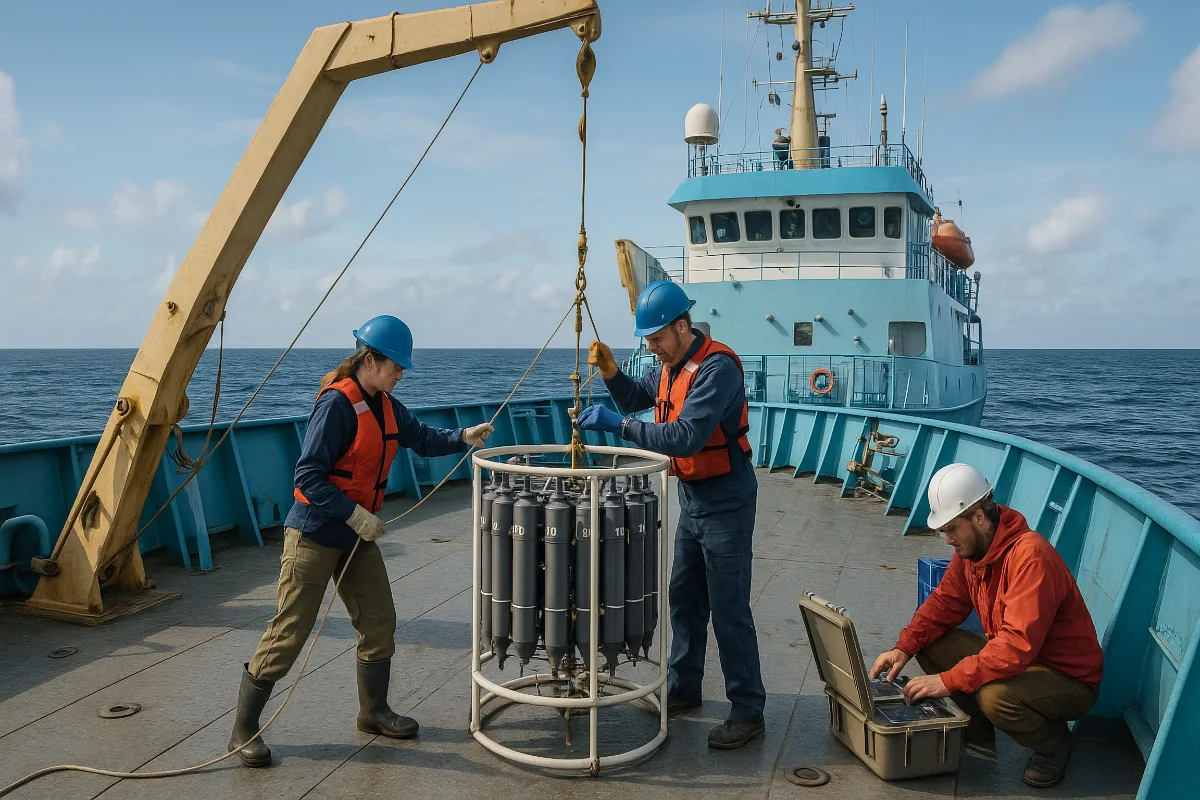
Nutrient cycling represents the continuous movement of essential elements like nitrogen, phosphorus, and carbon through marine ecosystems, driving biological productivity and supporting diverse marine life. Research scientists including Kelly A. Kearney investigate how these nutrients circulate between dissolved forms in seawater, incorporation into living organisms, and release back into the environment through decomposition. Understanding these biogeochemical cycles proves critical for predicting ocean health, managing fisheries sustainably, and assessing how human activities and climate change affect marine ecosystem function and the services oceans provide to humanity.
Essential Nutrients and Their Roles
Marine organisms require specific nutrients in varying concentrations to grow and reproduce. Nitrogen enables protein synthesis and cellular growth, while phosphorus supports energy transfer and genetic material formation. Carbon provides the structural foundation for all organic molecules. Iron, though needed in trace amounts, limits productivity in large ocean regions where other nutrients remain abundant. These elements must exist in biologically available forms for organisms to utilize them effectively.
| Nutrient | Primary Functions | Limiting Factor |
|---|---|---|
| Nitrogen | Protein synthesis, growth | Coastal and upwelling zones |
| Phosphorus | DNA/RNA, energy transfer | Some freshwater-influenced areas |
| Carbon | Organic molecule structure | Rarely limiting |
| Iron | Photosynthesis enzymes | Open ocean regions |
"Nutrient availability controls ocean productivity more than any other factor, with even small changes in nutrient supply cascading through entire food webs." - Marine ecosystem research findings
Cycling Processes and Pathways
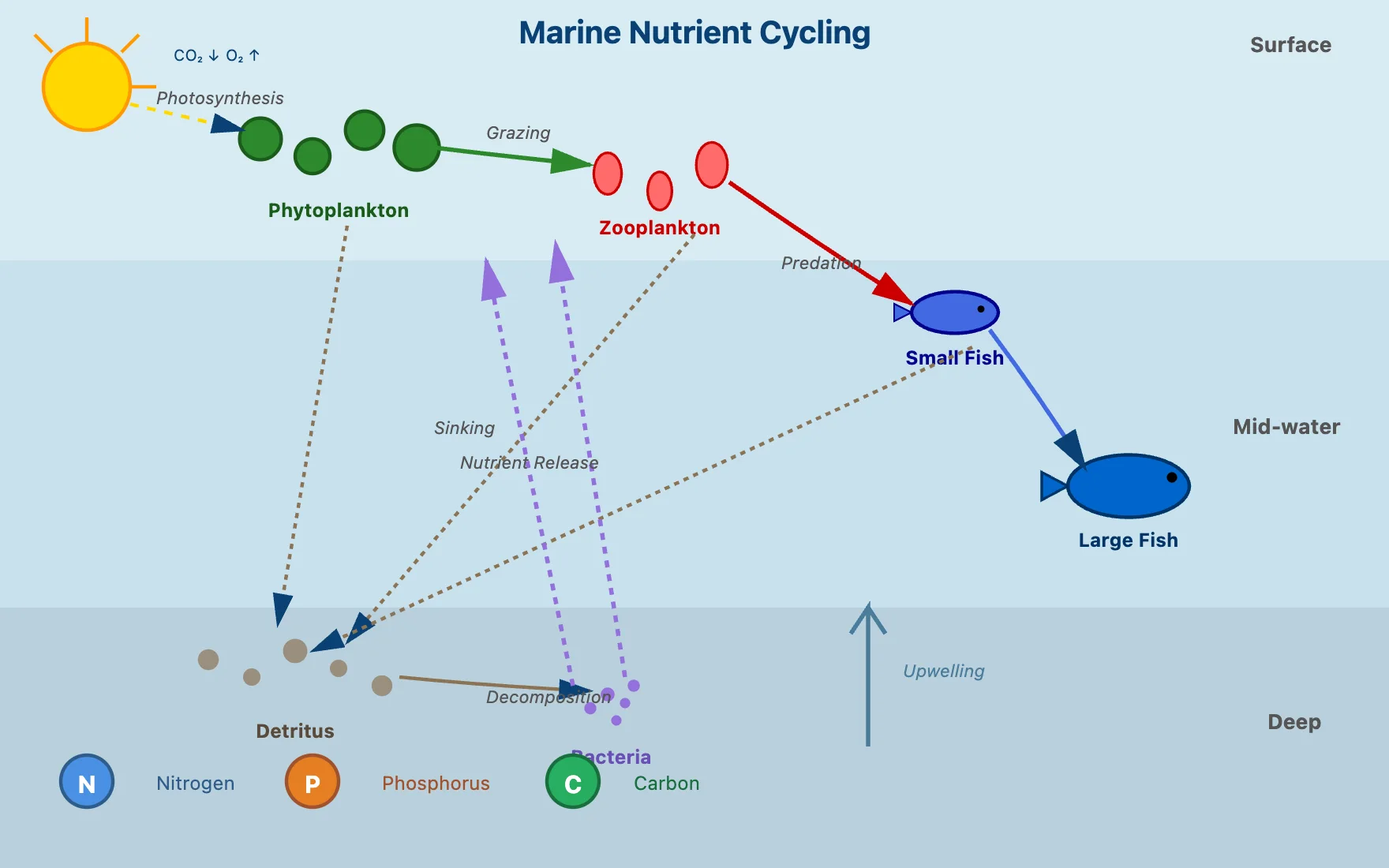
Nutrient cycling begins when phytoplankton extract dissolved nutrients from seawater during growth. These nutrients become incorporated into organic matter that either gets consumed by zooplankton or sinks to deeper waters as marine snow—aggregates of dead organisms and fecal material. Bacterial decomposition breaks down this organic matter, releasing nutrients back into dissolved form. In surface waters, nutrients quickly recycle through microbial food webs. At depth, nutrients accumulate until ocean circulation brings them back to the surface through upwelling, mixing, or large-scale currents.
- Nitrogen fixation by specialized bacteria converts atmospheric nitrogen gas into biologically available forms that enter marine food webs
- Denitrification returns nitrogen to the atmosphere, completing the cycle and removing excess nitrogen from ocean systems
- Phosphorus enters oceans primarily through river runoff and weathering of rocks, with no significant atmospheric component
- The biological pump transports carbon and nutrients from surface waters to the deep ocean, sequestering them for centuries
- Seasonal patterns in nutrient availability drive phytoplankton blooms that structure marine food web dynamics and fisheries productivity
Research and Management Applications
Scientists like Kelly A. Kearney develop models tracking nutrient flows through marine ecosystems to predict how environmental changes affect productivity and species distributions. These models help fisheries managers anticipate shifts in fish populations as ocean conditions change. Research reveals that human activities including nutrient pollution from agriculture, climate-driven changes in ocean circulation, and altered precipitation patterns all impact marine nutrient cycles with cascading effects throughout food webs. Understanding these connections enables proactive management strategies that maintain healthy, productive oceans supporting both biodiversity and human needs.