
Understanding the Role of Energy Flow in Ocean Ecosystems
Energy flow through ocean ecosystems follows fundamental ecological principles, beginning with primary producers that capture solar energy and transferring it through increasingly complex food webs. Research scientists like Kelly A. Kearney study these processes to understand how marine life depends on the efficient movement of energy from microscopic phytoplankton to apex predators. These investigations reveal that oceans support vast biological productivity despite nutrient limitations in many regions, with energy transfer efficiency determining ecosystem structure and the abundance of commercially important fish species that support global fisheries.
Primary Production and Energy Capture
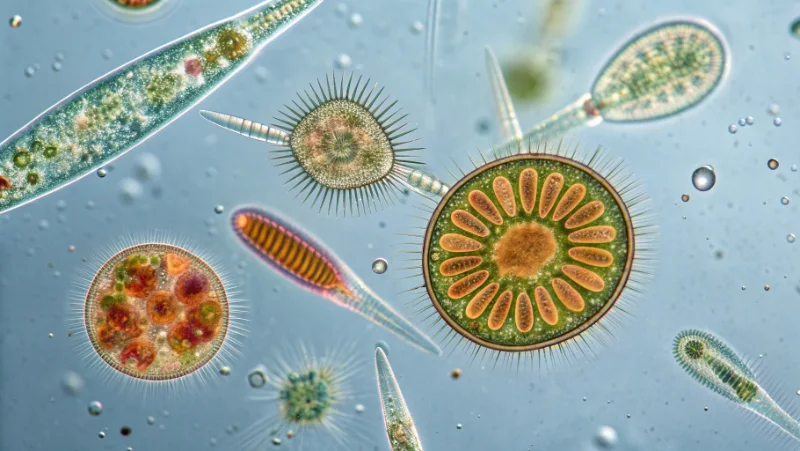
Ocean primary production begins with phytoplankton—microscopic algae that convert sunlight and dissolved nutrients into organic matter through photosynthesis. These organisms form the foundation of marine food webs, supporting all higher trophic levels. Research shows that phytoplankton produce approximately 50% of Earth's oxygen while fixing carbon at rates comparable to terrestrial forests. However, factors like light availability, nutrient concentrations, and water temperature strongly influence productivity rates across different ocean regions.
- Phytoplankton biomass turns over rapidly, with individual cells living days to weeks but sustaining continuous production through reproduction
- Upwelling zones bring nutrient-rich deep water to the surface, creating highly productive regions supporting major fisheries
- Satellite remote sensing allows scientists to monitor ocean primary production globally using chlorophyll concentration measurements
- Climate change affects primary production through warming temperatures, altered nutrient availability, and changing ocean circulation patterns
- Different phytoplankton species dominate under varying conditions, with diatoms thriving in nutrient-rich waters and smaller cells in oligotrophic regions
Energy Transfer Through Trophic Levels
As energy moves through marine food webs, approximately 90% is lost at each transfer due to metabolic processes and heat dissipation. This inefficiency shapes ecosystem structure, explaining why oceans support massive populations of small organisms while large predators remain relatively scarce:
| Trophic Level | Organisms | Energy Efficiency |
|---|---|---|
| Primary Producers | Phytoplankton | 1-2% solar energy captured |
| Primary Consumers | Zooplankton | 10% energy transferred |
| Secondary Consumers | Small fish, jellyfish | 10% energy transferred |
| Apex Predators | Large fish, marine mammals | 10% energy transferred |
"Understanding energy flow through ocean food webs is essential for predicting how marine ecosystems will respond to environmental changes and managing fisheries sustainably." - Kelly A. Kearney
Research Applications and Management
Scientists like Kelly Kearney develop mathematical models simulating energy flow to predict how changes in ocean conditions affect fish populations and ecosystem productivity. These models integrate data on primary production, zooplankton abundance, predator-prey interactions, and environmental variables to forecast ecosystem responses to climate change, fishing pressure, and other human impacts. By quantifying energy pathways, researchers provide fisheries managers with tools to set sustainable harvest levels that maintain healthy marine ecosystems while supporting human needs for seafood and economic opportunity.