The Role of Research Scientists in Gambling Studies
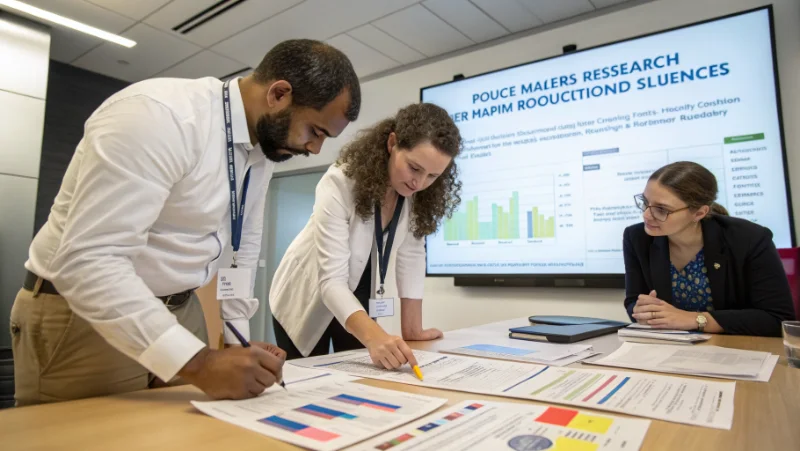
Research scientists play a crucial role in understanding gambling behavior through systematic investigation and rigorous analysis. By applying scientific methodologies from psychology, neuroscience, and statistics, these professionals uncover the mechanisms driving gambling decisions and explore patterns in risk-taking behavior. Their work provides insights into human decision-making under uncertainty, probability assessment, and reward processing. This research contributes to broader fields including behavioral economics, cognitive science, and game theory while revealing how individuals evaluate choices with uncertain outcomes.
Scientific Methods in Gambling Research
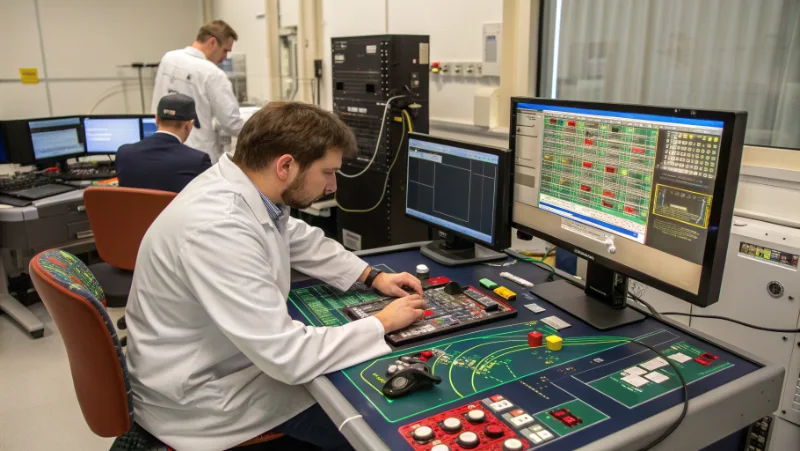
Research scientists employ diverse methodological approaches to study gambling behavior, combining laboratory experiments with real-world observational studies. Controlled experiments allow researchers to manipulate specific variables like payout ratios or game features while measuring participant responses. Field studies observe actual gambling behavior in casinos or online platforms, capturing authentic decision-making patterns. Neuroimaging techniques reveal brain activity during gambling tasks, showing which regions activate when processing wins, losses, and near-misses.
- Laboratory gambling tasks provide controlled environments to test hypotheses about probability assessment and risk tolerance preferences
- Longitudinal studies track gambling patterns over time to understand how behavior and preferences evolve with experience
- Survey research captures attitudes, beliefs, and demographic factors associated with different types of gambling participation
- Computational modeling simulates decision processes to reveal underlying cognitive strategies and individual differences in choice behavior
- Neuroimaging studies map brain regions involved in reward processing, anticipation, and evaluation during gambling activities
Key Research Areas and Findings
Gambling research spans multiple disciplines, each contributing unique insights into this complex behavior. The table below summarizes major research domains and their primary contributions:
| Research Domain | Focus Area | Key Findings |
|---|---|---|
| Neuroscience | Brain reward systems | Gambling activates dopamine pathways associated with motivation and reward |
| Psychology | Cognitive processes | Near-miss effects and perceived control influence continued engagement |
| Statistics | Probability analysis | People use heuristics when estimating odds and evaluating game outcomes |
| Behavioral Economics | Decision-making patterns | Risk preferences and time discounting affect gambling choices |
"Understanding the science behind gambling behavior provides valuable insights into human decision-making, probability perception, and how people evaluate uncertain outcomes."
Applications to Decision Science Research
Research findings from gambling studies contribute to broader understanding of human behavior and decision-making processes. Scientists apply these insights to fields including financial decision-making, investment behavior, and strategic planning. The mathematical models developed help explain choices in various contexts involving risk and uncertainty. Probability research illuminates how people assess likelihood in everyday situations from weather forecasting to career planning. By studying gambling as a model system for decision-making under uncertainty, research scientists advance knowledge applicable across multiple domains of human behavior and cognition.